Cultural Threads Woven Into Symbols and Structures of International Slot Games
Morgan Zimmermann · Jun 28, 2026
Cultural Threads Woven Into Symbols and Structures of International Slot Games
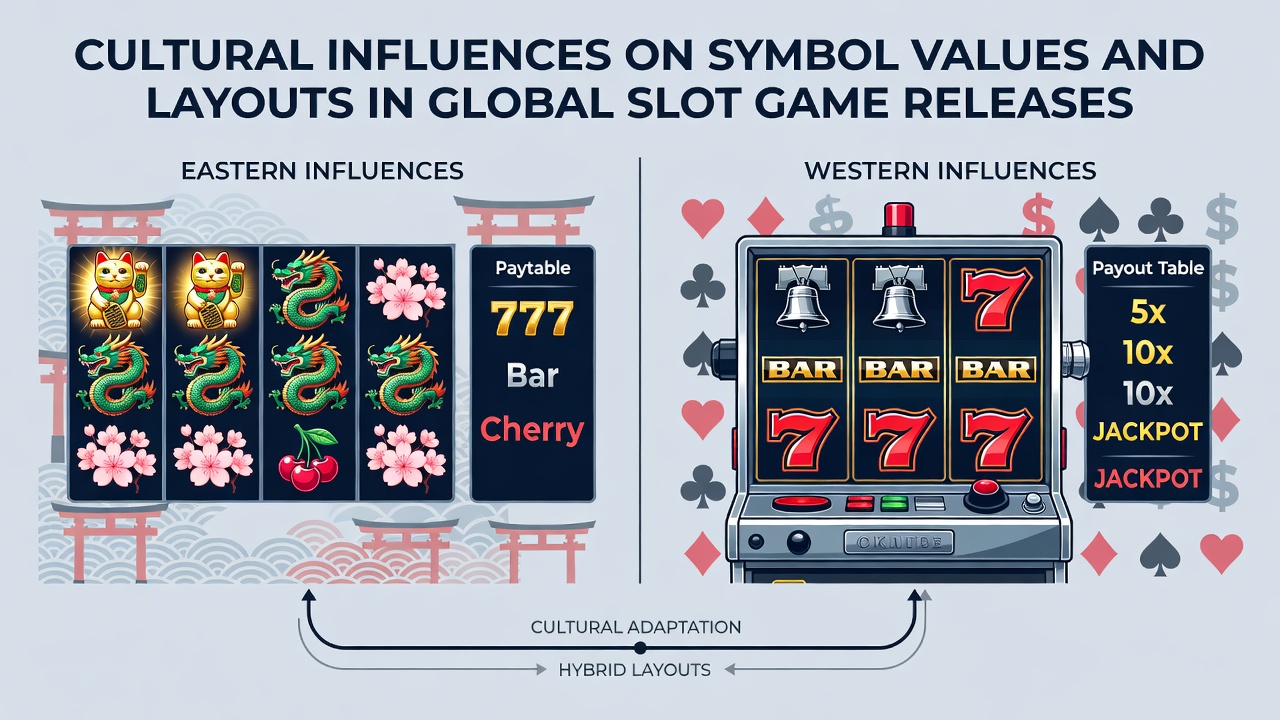
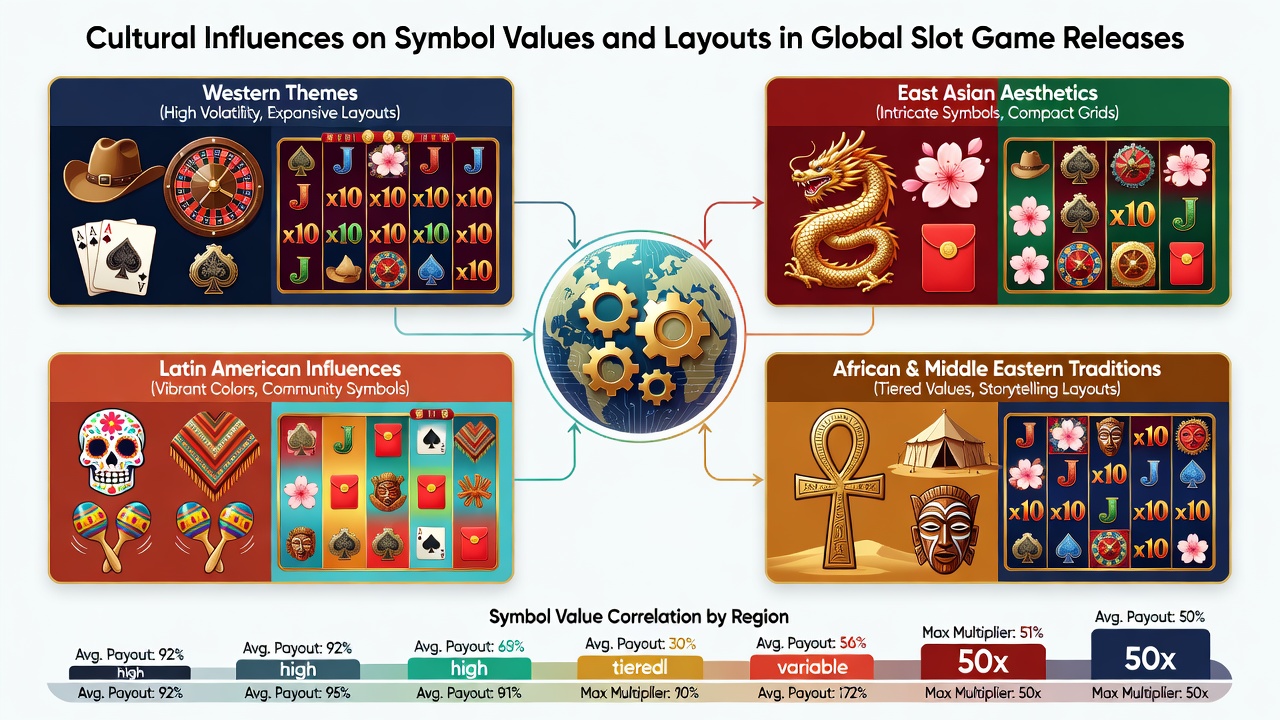
Developers adjust reel symbols and grid arrangements according to regional traditions because player preferences shift dramatically from one market to another, and data from multiple territories shows measurable differences in engagement when symbols align with local beliefs about luck and fortune. Observers note that Chinese-themed releases frequently assign high values to dragons and the number eight since numerology studies link these elements to prosperity, whereas releases aimed at European audiences often elevate classic card suits and fruits because those icons trace back to early 20th-century mechanical machines popular in pubs and clubs. Researchers who examined payout distributions across Asia and the Americas discovered that layouts featuring five reels with 243 ways to win appear more often in titles adapted for Thai and Malaysian players, while three-reel formats with single paylines remain common in certain North American casino floors where nostalgia influences machine selection.
Symbol Values Rooted in Regional Beliefs
Symbol hierarchies change because cultural narratives assign different meanings to the same image, and game studios therefore recalibrate prize tiers to match those expectations. In Japanese releases the cherry blossom frequently occupies a premium position because seasonal festivals celebrate renewal, yet the same flower might occupy a lower tier in Middle Eastern adaptations where geometric patterns and lanterns carry stronger resonance. Australian regulatory filings indicate that native wildlife such as the kangaroo appears in locally distributed titles at elevated payout levels, reflecting national iconography that resonates with domestic audiences. Those who track release calendars point out that June 2026 saw several providers launch titles featuring Andean condors and Inca motifs for Latin American markets after internal testing revealed higher retention rates when symbols connected directly to regional heritage stories.
Layout Adaptations Across Markets
Grid structures follow similar patterns of localization because reel counts, row numbers, and cluster mechanics interact with player habits shaped by long-standing gaming traditions. Cluster-pay formats dominate recent Korean and Taiwanese releases since mobile-first audiences there respond positively to exploding symbol chains that fill the screen without traditional paylines, while fixed payline structures continue to dominate in German and Dutch online lobbies where regulatory emphasis on transparency favors clear line-based calculations. Industry reports compiled by the Canadian Gaming Association reveal that progressive jackpot networks integrate more readily with six-reel layouts in titles distributed across provinces because extended grids allow for layered bonus triggers that align with existing lottery-style preferences. Developers therefore test multiple configurations before final rollout, adjusting cluster sizes or adding expanding reel modifiers to suit each territory's documented engagement metrics.
Case Examples From Global Releases
One studio adjusted a base game originally built around Mediterranean olive branches and amphorae by swapping those icons for koi fish and temple gates when preparing an East Asian variant, and subsequent analytics showed a measurable lift in average session length. Another provider introduced a grid that expands from five by three to six by four during bonus rounds specifically for releases targeting Brazilian players, citing internal data that linked the expanding format to increased interaction with free-spin features. Research conducted at the University of Nevada's gaming laboratory has documented how certain African-inspired titles incorporate bead patterns arranged in non-linear clusters because those arrangements mirror traditional counting systems used in local markets, and operators report stronger initial uptake when the visual layout echoes familiar cultural motifs. External analyses from the Canadian Gaming Association further confirm that layout variations produce statistically significant differences in play duration across provinces, prompting providers to maintain separate build branches for distinct regulatory zones.
Regulatory and Technical Considerations
Compliance requirements add another layer because certification bodies in different jurisdictions evaluate symbol probabilities and layout fairness through distinct lenses, and studios therefore embed modular code that allows rapid reconfiguration of both icon values and reel mathematics. Australian authorities require explicit disclosure of symbol weighting whenever cultural themes reference indigenous designs, which has led developers to publish detailed probability tables alongside each localized release. European testing labs apply similar scrutiny to cluster mechanics because those formats alter hit frequency calculations, prompting providers to supply region-specific mathematical sheets that demonstrate compliance with local transparency standards. Observers note that these layered approval processes extend development timelines yet ultimately produce titles that perform reliably across borders because the underlying symbol and layout decisions already incorporate documented cultural preferences.
Future Patterns Emerging in 2026
Projections compiled ahead of June 2026 indicate continued growth in hybrid layouts that blend traditional paylines with selective cluster zones, allowing a single title to serve multiple markets through configurable toggles. Providers increasingly commission ethnographic research before green-lighting new themes, and the resulting data feeds directly into symbol ranking algorithms that prioritize culturally resonant icons over generic alternatives. Those who monitor release pipelines report that titles incorporating Southeast Asian textile patterns alongside adjustable reel heights have entered certification queues in both Thailand and Singapore, suggesting that layout flexibility will become a standard feature rather than an exception. Data from cross-border operator networks shows that games carrying multiple cultural calibrations achieve broader distribution footprints because operators can activate region-appropriate versions without commissioning entirely new builds.
Conclusion
Global slot development now routinely factors cultural symbol hierarchies and layout conventions into the earliest design stages because empirical performance metrics demonstrate clear advantages when games reflect local traditions. Studios maintain libraries of modular assets and mathematical models that permit efficient adaptation, and regulatory frameworks across continents increasingly accommodate these variations through standardized disclosure requirements. The result is a growing catalog of releases whose symbols and grids carry fingerprints of the markets they target, supported by research that continues to map the intersections between cultural meaning and gameplay mechanics.