From Pixel Art Origins to Cinematic Sequences: The Visual Journey of Digital Reel Entertainment
Kai Richter · Jul 14, 2026
From Pixel Art Origins to Cinematic Sequences: The Visual Journey of Digital Reel Entertainment
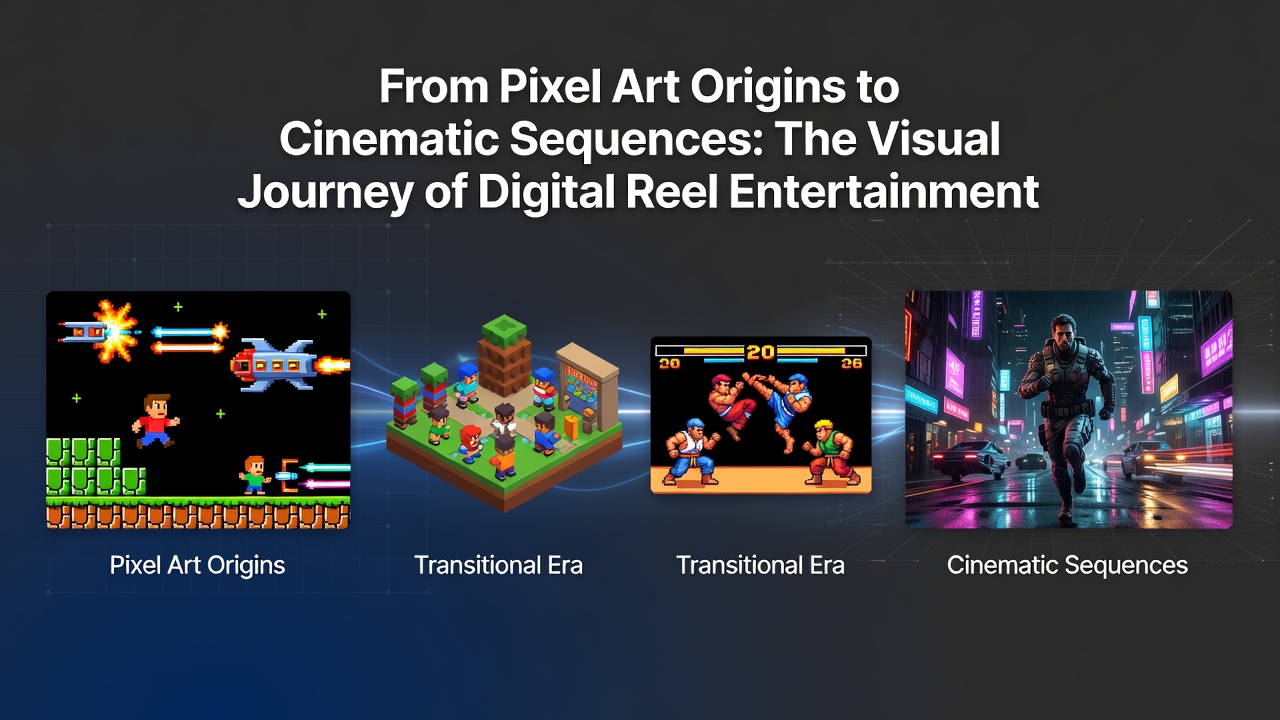
The visual evolution of digital reel entertainment spans several decades of technological progress that transformed simple blocky displays into intricate sequences resembling film production. Developers started with constrained hardware in the 1970s and 1980s when systems rendered symbols through limited color palettes and grid-based sprites, yet those foundations established core mechanics that persist today in updated forms. Hardware constraints forced artists to convey motion through repeated frames while sound cues reinforced the spinning action across arcade cabinets and early home consoles.Foundations in Limited Computing Environments
Engineers at companies like Atari and Bally relied on 8-bit processors that produced symbols composed of 16 by 16 pixel grids, and these designs appeared across mechanical-electronic hybrids before fully digital versions emerged. Data from early industry archives shows that color depth rarely exceeded 16 hues, which required careful shading to suggest depth on flat screens. Observers note that players recognized patterns quickly because the visuals prioritized clarity over realism, and this approach influenced reel layouts that featured fruits, bars, and sevens as recognizable icons.
Programmers optimized every byte of memory to animate three or five reels in sequence, while collision detection between symbols remained basic yet functional. Research from computing history collections indicates that refresh rates hovered around 30 frames per second on many platforms, sufficient for the era but far from the fluid motion seen later. Those limitations encouraged creative solutions such as dithering techniques that blended adjacent pixels to simulate gradients without additional hardware.
Expansion Through 16-Bit and Early 3D Capabilities
By the early 1990s, 16-bit systems introduced larger sprite sheets and palette swapping that allowed symbols to change color based on game state. Developers incorporated parallax scrolling backgrounds that gave the illusion of layered depth behind the reels, and this technique appeared in multiple digital entertainment titles released between 1991 and 1995. Figures from hardware sales records reveal that memory capacity increased from 64 kilobytes to several megabytes, directly enabling more detailed character animations on each reel position.
Transition to polygon-based rendering arrived shortly afterward, when graphics cards began supporting texture mapping on three-dimensional objects. Reel symbols gained volume through simple extruded shapes that rotated during spins, and lighting models added highlights that responded to virtual light sources. Industry documentation from that period records the first widespread use of particle systems to represent sparks or coin bursts when combinations aligned, marking an early step toward richer feedback loops.
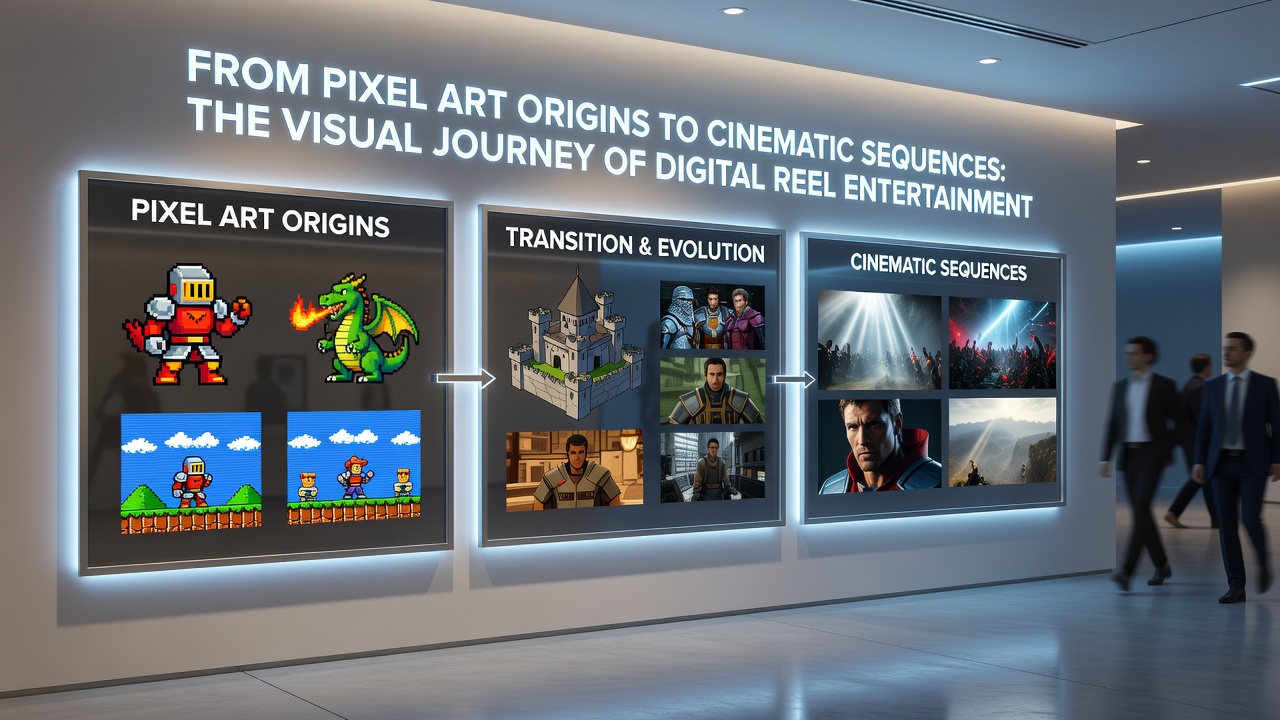
Arrival of Real-Time Cinematic Techniques
Modern graphics pipelines incorporate real-time shaders that calculate reflections, refractions, and subsurface scattering on reel symbols, and these calculations occur within milliseconds per frame. High-definition resolutions reached 1920 by 1080 pixels by the mid-2000s, followed by 4K adoption that sharpened edges on intricate designs such as engraved metals or translucent gems. According to reports from the Entertainment Software Association, rendering budgets for visual effects in digital entertainment grew steadily as consumer GPUs advanced through successive generations.
Full-motion video sequences now integrate with procedural animations, allowing story-driven interludes that play after significant reel outcomes. Motion capture data supplies natural movement for character models that appear between spins, and these assets blend seamlessly with the underlying reel grid through camera transitions. Australian Interactive Games Association documentation notes that audio-visual synchronization improved markedly once dedicated video encoders became standard in development kits.
Current Implementations and Future Directions
Ray tracing cores in contemporary hardware enable accurate light bounces across metallic reel frames and glass surfaces, producing reflections that shift as symbols settle into place. Developers combine these techniques with machine learning upscaling that preserves detail while maintaining frame rates above 60 per second on mid-range devices. As of July 2026, several platforms demonstrate hybrid rendering that mixes traditional sprite layers with fully ray-traced foreground elements, delivering consistent performance across mobile and desktop environments.
Virtual production tools borrowed from film studios allow artists to pre-visualize reel sequences in three-dimensional space before exporting optimized assets. This workflow reduces iteration time while preserving cinematic composition rules such as rule-of-thirds framing and dynamic camera paths. Research papers presented at SIGGRAPH conferences document how these methods scale from high-end consoles down to browser-based implementations without requiring separate codebases.
Conclusion
The progression from constrained pixel grids to film-grade sequences reflects continuous hardware and software advancement that reshaped how digital reel entertainment presents information to audiences. Each technological layer built upon the previous one, expanding visual vocabulary while retaining the fundamental loop of symbol alignment and reward feedback. Continued integration of emerging rendering methods suggests further refinement in real-time cinematic quality across future platforms.