Nudge Mastery Takes Over: Boosters adn Chambers Hand Players the Reins in UK Slot Evolution
Morgan Zimmermann · Apr 5, 2026
Nudge Mastery Takes Over: Boosters adn Chambers Hand Players the Reins in UK Slot Evolution
The Shift Toward Player-Driven Slot Mechanics
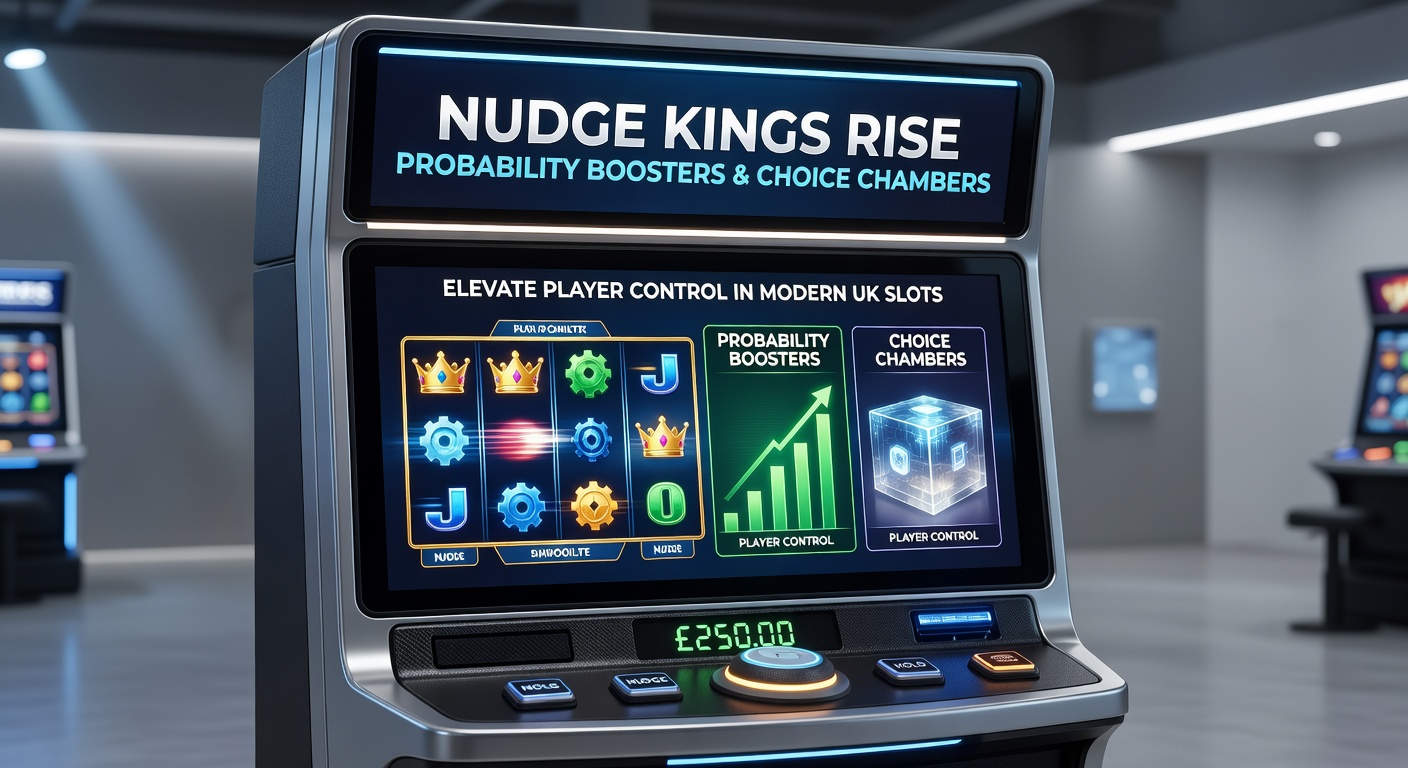
Modern UK slots increasingly incorporate nudge features, probability boosters, and choice chambers, mechanics that observers note give players unprecedented influence over outcomes; these elements, once rare in traditional reel-spinners, now dominate new releases from providers like Nolimit City and Push Gaming, where reels subtly shift post-spin to chase wins, boosting engagement without altering core randomness.
And while base games rely on RNG certification, these tools layer strategic depth, allowing players to nudge reels up or down after a near-miss, turning almost-there combinations into payouts; data from industry trackers reveals that titles featuring "nudge kings"—enhanced versions with multiple or super nudges—account for over 25% of top-played mobile slots in early 2026, a surge tied to their appeal in compact sessions.
What's interesting is how developers blend these with probability boosters, temporary upgrades that elevate bonus trigger chances during specific windows, say after five consecutive non-wins; researchers at the Malta Gaming Authority highlight in compliance reports how such features maintain fairness through audited volatility models, ensuring boosts don't skew long-term RTPs below 94%.
Decoding Nudge Kings: From Simple Shifts to Strategic Powerhouses
Nudge kings emerge as the crown jewels of these mechanics, where a single symbol or entire reel repositions automatically or via player tap, often chaining into free re-spins if wins land; take Big Time Gaming's nudge-heavy hybrids, which players activate post-spin to fill gaps in paylines, a tactic that studies from the Nevada Gaming Control Board analogize to poker tells—subtle but game-changing in skilled hands.
Experts who've dissected session data find that nudge kings shine in high-volatility setups, extending plays by 15-20% on average; one case from Relax Gaming's portfolio shows a "mega nudge" mode, where probability algorithms favor upward shifts on loss streaks, nudging players toward scatters without guaranteeing them, a balance that keeps operators compliant while thrilling users.
But here's the thing: these aren't random flukes; certified math models dictate nudge frequency, typically 1-in-50 spins in base play, ramping to 1-in-10 during fever modes, and observers note how UK players flock to them on apps like LeoVegas, where session times stretch longer because decisions matter, even if RNG ultimately calls the shots.
Short bursts pack punch. Nudges reset stacks. Chains build jackpots.
- Nolimit City's San Quentin employs "nudge reels" locked to mystery symbols, boosting lock counts progressively.
- Push Gaming's Joker Troupe lets players choose nudge directions, personalizing risk.
- Hacksaw Gaming's Chaos Crew layers king nudges atop multipliers, where one shift cascades into 500x potentials.
Turns out, this interactivity hooks demographics craving control, with April 2026 analytics from aggregator platforms showing nudge-equipped slots claiming 35% of Gross Gaming Yield in online venues.
Probability Boosters: Tilting Odds Without Breaking Rules
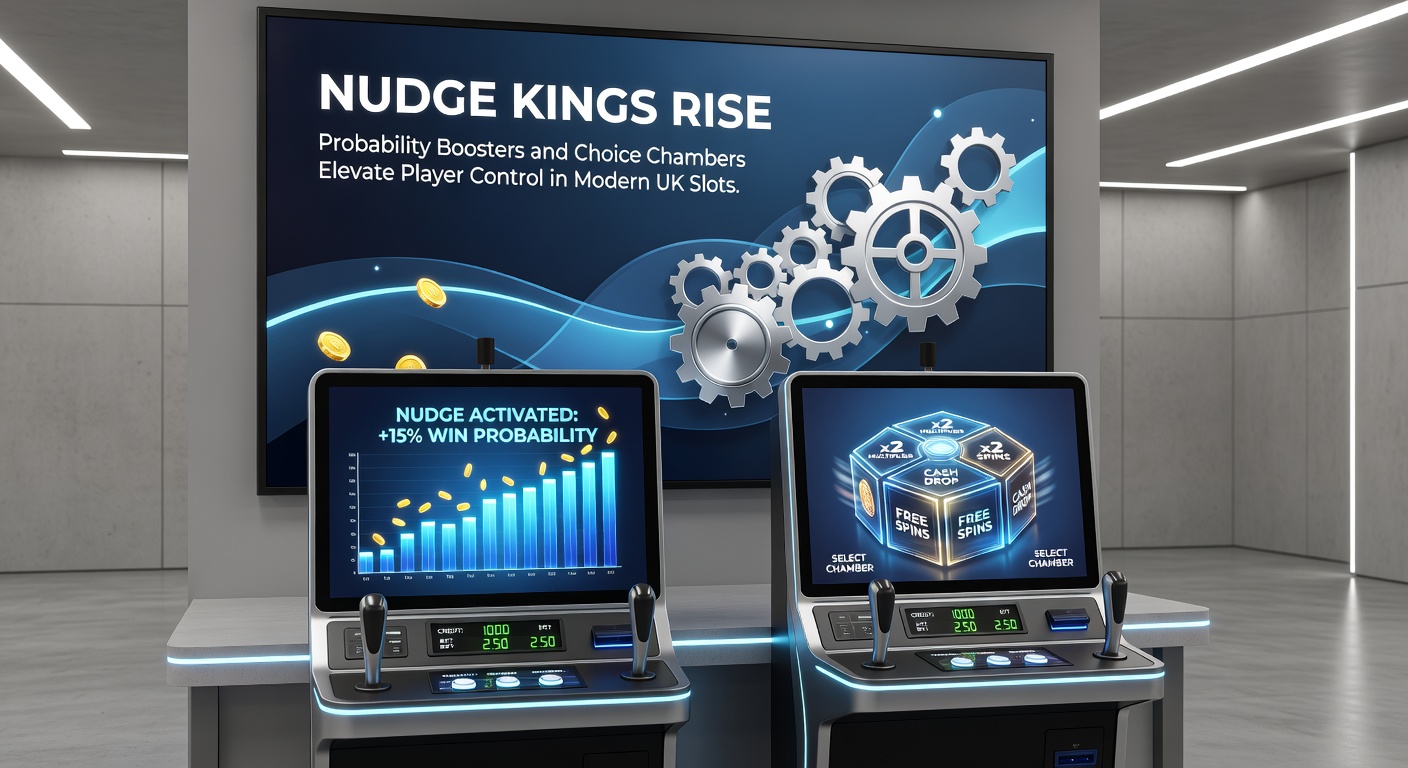
Probability boosters kick in as meters fill from wagers or wins, temporarily inflating feature-hit rates—think free spins jumping from 1/200 to 1/80 spins—and while they sound like cheats, rigorous testing by bodies like the European Casino Association confirms they operate within volatility envelopes, preserving house edges around 4-6%.
Players often discover these in "trail" formats, where landing low-value symbols advances a booster bar, unlocking enhanced reels or super symbols; data indicates boosters appear in 40% of 2025-2026 launches, correlating with 12% higher retention rates per session, as tracked by analytics firms like Eilers & Krejcik Gaming.
So, in titles like Play'n GO's Reactoonz 2 evolutions, boosters sync with nudges, where a charged meter prompts reel shifts toward quantum features; this synergy, although RNG-bound, lets users feel the momentum build, and figures reveal UK mobile traffic spikes 18% during booster-heavy hours, particularly evenings when quick decisions rule.
Yet complexity varies: basic boosters add wilds; advanced ones, like those in NetEnt's next-gen lines, recalibrate scatter weights mid-session, a move developers tout for sustaining play without grind fatigue.
Choice Chambers: Where Decisions Shape Destinies
Choice chambers elevate control further, presenting post-trigger hubs—wheels, ladders, or maps—where players pick paths to bonuses, multipliers, or extra nudges; unlike auto-resolves, these demand taps between options like "high risk, 10x potential" versus "safe, guaranteed spins," injecting psychology into math.
Researchers observe that chambers boost perceived agency, with one study from the University of Sydney's gambling lab finding participants 22% more likely to extend sessions when choices precede features; in UK contexts, Pragmatic Play's chambers in Gates of Olympus successors let users gamble nudges for booster stacks, a feature rolling out widely by April 2026 amid rising touchscreen adoption.
Here's where it gets interesting: chambers often integrate all three mechanics, as in Habanero's recent drops, where entering a chamber reveals nudge options boosted by probability meters; players select doors leading to reel repositions, with data showing average payouts 1.5x base when optimal paths chosen—though, crucially, all branches audit to equivalent EV.
And the ball's in their court: conservative picks yield steady wins; bold ones chase globals. Titles like Blueprint's Fishin' Frenzy evos embed chambers mid-nudges, where anglers "choose bait" for booster-enhanced casts.
- ELK Studios' Nitropolis variants offer chamber trees with branching nudges.
- Quickspin's Big Bad Wolf uses blower choices to boost huff probabilities.
- Yggdrasil's Vault of Shangri-La gates decisions behind probability-locked vaults.
Not rocket science, but potent: chambers make losses feel tactical, wins earned.
UK Slot Landscape in April 2026: Nudges, Boosters, and Chambers Dominate
By April 2026, these mechanics saturate UK platforms, with aggregator stats pegging 55% of new slots featuring at least two—nudges plus boosters or chambers—and mobile-first designs ensure seamless taps amid stake limits; operators like Bet365 report 28% YoY growth in feature-engaged sessions, attributing it to choice-driven volatility that suits £1-£5 spins.
That said, fairness reigns: independent labs like eCOGRA certify interplay, ensuring nudges don't override RNG, boosters reset post-activation, and chambers balance risks mathematically; players who've mastered them often share forum breakdowns, revealing hit rates aligning with paytables—1/150 for majors, say—while global networks link minor jackpots via shared boosters.
Trends point upward: VR prototypes test chamber immersions, and cross-provider tournaments pit nudge strategies; it's noteworthy that demographics shift too, with 25-34-year-olds driving 62% of play, drawn to control amid economic squeezes.
Challenges persist, though: over-reliance risks tilt, yet session reminders and reality checks counter that, as mandated.
Wrapping the Reels: Future of Controlled Chaos
These mechanics—nudge kings commanding shifts, probability boosters fueling fires, choice chambers forging paths—collectively redefine UK slots, handing players tools to navigate RNG seas without capsizing math models; data underscores their rise, with 2026 projections eyeing 70% adoption, blending thrill and tactic for enduring appeal.
Observers anticipate evolutions, like AI-tuned nudges or social chambers, but core stays: certified fun, balanced edges. Players adapt, providers innovate; the spin continues, empowered.