Provider Tactics for Balancing Randomness in Anywhere Pays Gaming Systems
Kai Richter · Jul 12, 2026
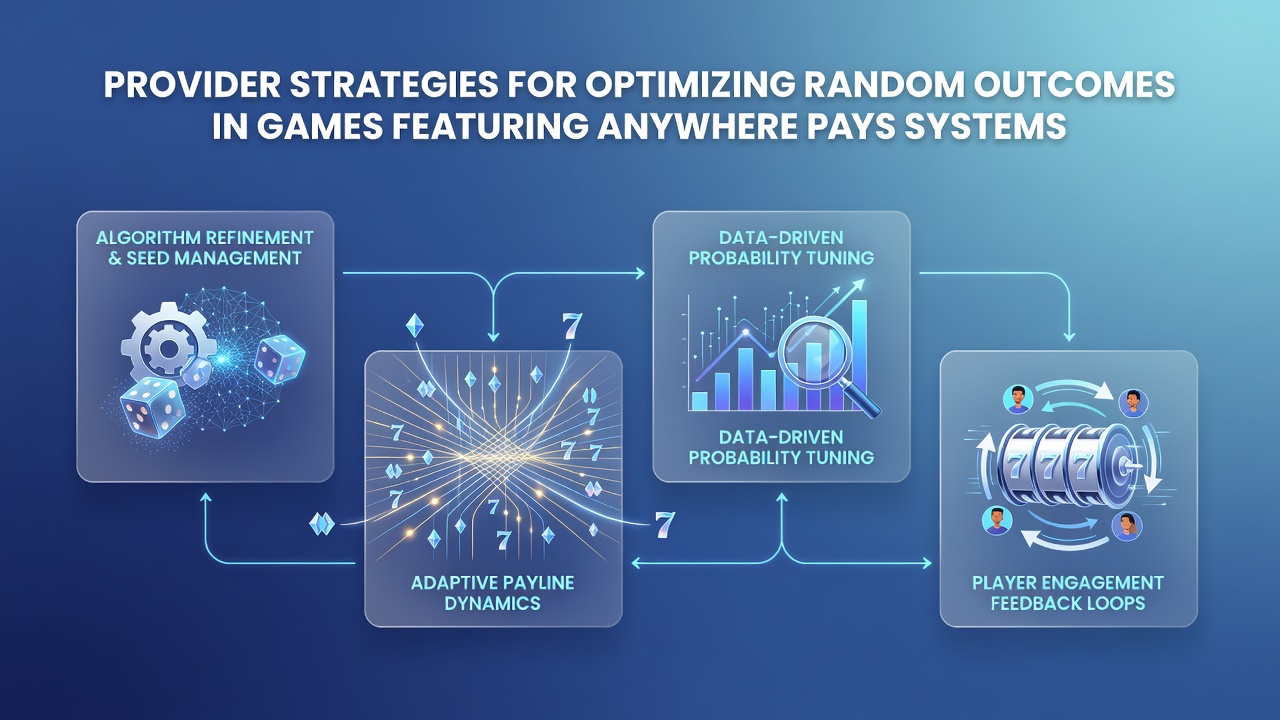
Provider Tactics for Balancing Randomness in Anywhere Pays Gaming Systems
Game developers have refined methods for managing random number generators in anywhere pays formats, where symbols trigger payouts from any position rather than fixed lines. These systems rely on complex algorithms that maintain certified randomness while delivering consistent return-to-player percentages across thousands of spins.
Core Mechanics of Anywhere Pays Designs
Anywhere pays slots eliminate traditional paylines in favor of scatter-based or cluster evaluations, which means providers must recalibrate their RNG frameworks to account for higher symbol interaction rates. Data from independent testing labs shows these games often feature RTP ranges between 94% and 97%, with volatility adjusted through weighted symbol distributions that prevent clustering patterns from occurring too frequently or too rarely.
Engineers integrate real-time probability tables that update after each cascade or tumble sequence, ensuring subsequent drops maintain independent randomness even as the grid evolves. This approach prevents the perception of streaks while preserving the mathematical integrity required for regulatory approval across multiple jurisdictions.
Algorithmic Adjustments for Outcome Distribution
Developers apply layered weighting systems to symbol reels, where base game symbols receive dynamic probability shifts based on current grid state. Research from the University of Nevada's gaming studies program indicates that such adjustments help stabilize session lengths without compromising certified randomness standards. Providers test these models through millions of simulated spins before deployment, tracking metrics like hit frequency and average win size to verify balance.
Some studios incorporate adaptive volatility controls that respond to player bet levels, though these remain within pre-certified parameters. Figures from industry reports reveal that games using these techniques achieve more even distribution of small, medium, and large outcomes compared to earlier fixed-reel anywhere pays titles.
Testing Protocols and Certification Pathways
Independent laboratories conduct extensive audits that examine both the core RNG and the anywhere pays evaluation logic. These reviews include stress tests for edge cases, such as maximum grid expansions during bonus rounds. Certification bodies in regions like Malta and Ontario require documentation showing that random outcomes remain statistically independent across all possible symbol combinations, including those generated during tumbling sequences.

Providers often run parallel simulations on cloud infrastructure to accelerate validation cycles, allowing teams to identify distribution anomalies weeks earlier than traditional methods permitted. This has become particularly relevant as new technical standards rolled out in July 2026 emphasized enhanced transparency in outcome reporting for cascade-heavy mechanics.
Integration with Bonus and Feature Layers
Bonus rounds in anywhere pays games introduce additional layers of complexity because free spin sequences or multiplier trails can extend session duration dramatically. Developers counterbalance this by tightening the random selection parameters for feature triggers, ensuring that entry rates align with overall RTP targets. Observers note that successful implementations use separate RNG streams for base game versus feature activation, which reduces correlation risks between regular play and high-value events.
Case examples from major studios demonstrate how symbol removal logic during cascades receives careful calibration so that remaining symbols do not create predictable win patterns. These adjustments rely on precomputed lookup tables rather than on-the-fly calculations to maintain speed and fairness.
Future Directions in Random Outcome Management
Emerging techniques include machine learning models trained on historical spin data to predict and correct minor distribution drifts before they affect player experience. While these tools assist internal quality control, final randomness certification still depends on established statistical tests rather than AI predictions. Reports from the Gambling Research Exchange Ontario highlight ongoing work to standardize evaluation criteria for anywhere pays systems that incorporate both vertical and horizontal symbol interactions.
Providers continue refining their approaches to meet evolving technical requirements without altering certified RTP values. The focus remains on delivering transparent, auditable systems that support long-term player engagement through mathematically sound design choices.
Conclusion
Optimizing random outcomes in anywhere pays games requires providers to combine precise algorithmic design, rigorous testing, and ongoing monitoring of distribution metrics. These strategies ensure that games meet regulatory standards while delivering varied and engaging play sessions across different markets and platforms.